


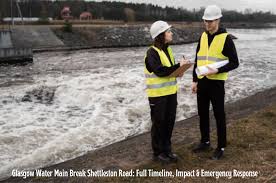
On May 29, 2025, one of Glasgow’s busiest thoroughfares — Shettleston Road in the city’s East End — was brought to a sudden halt when a major water main burst early in the morning, sending tonnes of pressurised water surging from beneath the surface and creating widespread disruption across the local community. The incident not only flooded roadways and pavements, but it also cut off water supplies and forced road closures, drawing attention to the challenges facing ageing urban infrastructure and the urgent need for future investment.
The Moment the Break Happened
The water main break occurred near the junction of Shettleston Road and St Mark Street, where an underground trunk main — a large water pipeline crucial to the distribution network — ruptured at around 8:30 AM. The rupture caused powerful water jets to surge through road surfaces and into the surrounding neighbourhood, quickly overwhelming drainage systems and creating hazardous conditions for vehicles and pedestrians alike.
Residents woke up to the sound of rushing water and within minutes were reporting surface flooding that stretched across multiple lanes of traffic. Local businesses and commuters were caught unprepared, with many unable to predict the scale of the disruption that was about to unfold.
Immediate Impact: Flooding, Road Closures, and Water Interruptions
Almost instantly, Shettleston Road was closed in both directions between key junctions stretching from Old Shettleston Road to Fernan Street, and from Westmuir Street to Hart Street. These closures were necessary to allow emergency crews — including Scottish Water engineers and Glasgow city officials — to safely access the scene and begin isolating the broken pipe.
Many commuters found their usual travel routes blocked, and public transportation services such as local bus routes were diverted onto alternative roads like Tollcross Road, significantly slowing journeys and causing frustration for daily travellers.
In addition to travel woes, residents in the G32 postcode area experienced loss of water supply, poor water pressure, and discoloured water coming from taps. These issues are typical after burst mains as sediment and air are introduced into the system during pressure fluctuations.
What Caused the Shettleston Road Water Main Burst?
Water main breaks can be triggered by a range of factors — but in this case, experts have pointed to a combination of infrastructure age, ground movement, and system pressure dynamics.
Ageing Infrastructure
Many sections of Glasgow’s water distribution network were installed decades ago. Pipes made of cast iron or older materials corrode over time, especially in urban areas where soil conditions, vibration from traffic, and fluctuating water pressures all place stress on buried infrastructure. When weaknesses reach a tipping point, mains are far more likely to fail. In Glasgow’s East End, some mains date back to earlier phases of the city’s development, making them more vulnerable to this type of failure.
Ground and Environmental Factors
Even in late May — a period without extreme winter frost or heavy rain — underground conditions can vary. Slight soil shifts due to weather, construction activity, or seasonal changes can stress pipelines. Over time, this can contribute to fractures and rupture points, causing mains to fail under operating pressure.
Pressure Dynamics
Water networks must maintain a careful balance of pressure to serve homes and businesses efficiently. However, pressure surges — caused by valve operations, flow changes, or sudden closures in other parts of the network — can exacerbate weaknesses in older pipes. If a section of pipe already has internal corrosion or structural damage, even a small pressure shock may be enough to trigger a break.
How Scottish Water Responded
As soon as the break was confirmed, Scottish Water mobilised emergency response teams to isolate the damaged section of pipe and begin repair works. The aim is always to limit the volume of water lost, protect the public and surrounding properties from flooding, and restore the network to service as quickly as possible.
The response involved:
- Closing valves on either side of the break to stop the main from ejecting more water.
- Deploying crews and equipment to excavate the pipe safely under traffic control measures.
- Replacing or repairing the damaged section of the main — a complex engineering task given the depth and location of the pipeline under Shettleston Road.
- Testing and reinstating supply to homes and businesses once repairs were complete, followed by checks to ensure water was safe and clear.
In many cases like this, temporary water service solutions such as bottled water distribution or dedicated supply support may also be offered to residents without adequate water. Customers dealing with discoloured water are usually advised to run cold taps slowly until clarity returns — a sign that sediment has cleared from the lines.
The Disruption to Daily Life
For many locals, the Shettleston Road water main break was more than just a traffic inconvenience — it affected everyday essentials. Loss of water supply disrupted cooking, cleaning, bathing, and even basic sanitation for residents in the G32 area. For older adults, families with children, or those with medical needs, even short outages can be stressful and challenging.
Local businesses — especially retail shops and cafes near Shettleston Train Station and The Forge Shopping Centre — reported notable drops in foot traffic due to road closures and diversions, translating directly into lost income for the day.
Public transportation services had to alter routes, affecting commuters and those relying on buses for work or appointments. Alternative routes increased travel time, leading to a knock‑on effect of delays across the network.
Recovery and Restoration
Thanks to concerted efforts by Scottish Water and local contractors, repairs were completed within a relatively short timeframe — often within 12 to 24 hours in similar incidents. Once the damaged pipe was replaced and tested, road restrictions were gradually lifted and water supply was restored to the majority of affected properties.
However, for some households, full water pressure and clarity took additional time as the system was rebalanced and checked for quality. During this period, residents were encouraged to conserve water where possible and remain patient as crews completed the final stages of restoration.
Broader Challenges: Glasgow’s Ageing Water Network
The Shettleston Road water main break is not an isolated case. Across Glasgow and the wider West of Scotland, similar bursts have occurred in recent years due at least in part to ageing infrastructure and evolving urban pressures. Incidents such as the Pollokshaws Road bursts earlier in 2025 and other breaks across local networks reflect a systemic need for ongoing maintenance, renewal, and investment to keep water services resilient.
In response to such challenges, Scottish Water has accelerated infrastructure investments, including major projects to enhance resilience, improve network connections, and enable better operational flexibility in times of stress. These improvements aim to reduce the frequency and impact of future bursts by enabling more efficient water management and redundancy across the network.
Lessons Learned and What Comes Next
The Shettleston Road incident underscores several important lessons for city planners, utilities, and residents:
1. Preparation and Communication Matter
Quick response times and clear communication from Scottish Water were crucial in keeping disruption to a minimum and reassuring residents. Ensuring that residents receive timely updates — whether through social media, local news, or service notifications — helps maintain calm and enables people to adapt quickly when crises occur.
2. Infrastructure Needs Ongoing Renewal
Urban water systems like Glasgow’s require sustained investment and proactive replacement of vulnerable pipelines. Regular condition assessments, prioritisation of high‑risk mains, and smart monitoring can help reduce the risk of unexpected bursts.
3. Community Awareness is Key
Residents can play a role in reporting early signs of leaks, pressure changes, or discoloured water — all early indicators that in some cases may help utilities address issues before they escalate. Registering for priority service alerts or local notification tools can also help vulnerable residents receive support during outages.
4. Future‑Proofing Through Investment
Major infrastructure investment — including network expansion and modernisation — will help increase resilience. Initiatives that connect network regions, deploy sensors to detect early leaks, and replace older mains with modern materials can dramatically improve how water systems respond to stresses and prevent large‑scale failures.
Conclusion
The Glasgow water main break on Shettleston Road was a stark reminder of how critical and yet fragile vital infrastructure can be. For residents, commuters, and business owners in G32 and surrounding areas, the disruption was a significant inconvenience — but it also highlighted the value of quick emergency response, the importance of resilient infrastructure, and the need for sustained investment in public utilities.
