


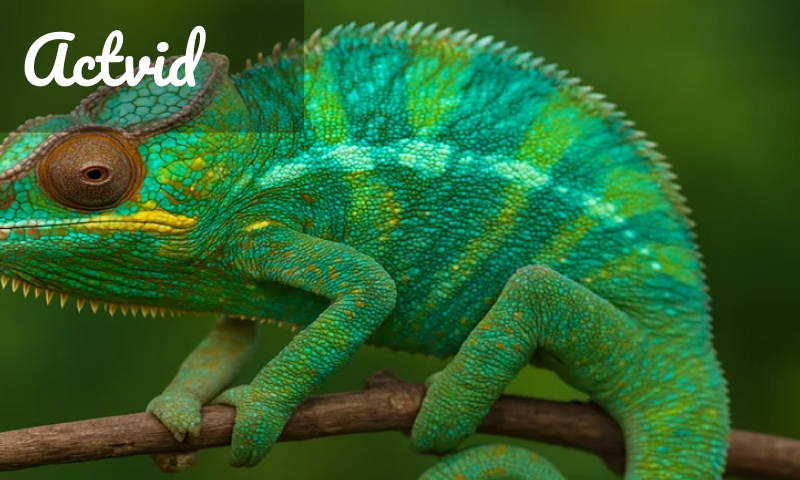
The term chameleónovité refers to one of the most fascinating and visually striking groups of reptiles on Earth. Known scientifically as Chamaeleonidae, this family of lizards has captured human imagination for centuries thanks to its remarkable ability to change color, rotate eyes independently, and hunt with lightning-fast precision. Far beyond their popular image, chameleónovité represent an extraordinary example of evolutionary specialization, ecological balance, and biological innovation.
In this in-depth guide, we explore the origins, anatomy, behavior, habitat, reproduction, and ecological importance of chameleónovité, while separating myths from scientific reality and explaining why these reptiles continue to intrigue researchers and wildlife enthusiasts around the world.
Understanding what chameleónovité really are
Chameleónovité are arboreal lizards primarily adapted to life in trees and shrubs. While many people assume that all chameleons look and behave the same, the family actually includes more than 200 recognized species with significant variation in size, color, and habitat preference.
Some species are small enough to rest comfortably on a fingertip, while others can grow to over half a meter in length. Despite this diversity, all chameleónovité share a set of defining traits that clearly distinguish them from other reptiles.
Their slow, deliberate movements are not a sign of weakness but a survival strategy. By swaying gently as they walk, they mimic the motion of leaves in the wind, making it harder for predators and prey alike to detect them.
The evolutionary history of chameleónovité
From an evolutionary perspective, chameleónovité are an ancient lineage that likely emerged over 60 million years ago. Fossil evidence suggests that their ancestors evolved in Africa, where most species are still found today. Over time, some populations spread to nearby regions, including southern Europe, the Middle East, and parts of Asia.
Madagascar stands out as a global hotspot for chameleónovité diversity. Geographic isolation allowed many species to evolve independently, resulting in an extraordinary range of forms and behaviors found nowhere else on Earth.
This long evolutionary history explains why chameleónovité possess such specialized physical features, each refined by natural selection to maximize survival in specific ecological niches.
Unique physical characteristics that define chameleónovité
One of the most iconic traits of chameleónovité is their color-changing ability. Contrary to popular belief, this feature is not primarily used for camouflage. Instead, color changes are driven by complex layers of specialized skin cells called chromatophores and iridophores, which reflect light in different ways.
Chameleónovité change color to regulate body temperature, communicate with rivals, and signal readiness to mate. Bright colors often indicate excitement, stress, or dominance, while darker shades can help absorb heat in cooler conditions.
Another defining feature is their independently moving eyes. Each eye can rotate almost 180 degrees, allowing chameleónovité to scan their surroundings in two directions simultaneously. When prey is detected, both eyes lock onto the target, enabling precise depth perception.
Their tongue is equally impressive. It can extend farther than the length of their body and retract in a fraction of a second. The sticky tip ensures that insects are captured efficiently, even from a distance.
Habitat and environmental adaptation
Chameleónovité are highly adaptable reptiles capable of surviving in a wide range of environments. Most species prefer forested or bushy areas where branches and foliage provide both cover and hunting opportunities. However, some species thrive in semi-arid regions and mountainous landscapes.
Their zygodactyl feet, with toes grouped into opposing clusters, allow them to grip branches securely. Combined with a prehensile tail, this grip gives chameleónovité exceptional stability, even in strong winds or on narrow perches.
Despite their adaptability, many chameleónovité species are sensitive to environmental changes. Deforestation, climate shifts, and habitat fragmentation pose serious threats to their survival, particularly for species with limited geographic ranges.
Feeding behavior and hunting strategy
Chameleónovité are primarily insectivorous, feeding on crickets, grasshoppers, flies, and other invertebrates. Larger species may also consume small birds or lizards on occasion. Their hunting method is based on patience and precision rather than speed.
They remain motionless for extended periods, blending into their surroundings until prey comes within range. Once the target is identified, the tongue shoots out with incredible acceleration, capturing the prey in milliseconds.
This energy-efficient hunting strategy allows chameleónovité to survive in environments where food may not be consistently abundant.
Reproduction and life cycle
Reproductive strategies among chameleónovité vary by species. Most lay eggs, depositing them in carefully chosen locations such as loose soil or leaf litter. The number of eggs can range from just a few to over fifty, depending on the species and environmental conditions.
Some chameleónovité species give birth to live young, a rare trait among reptiles. Hatchlings are independent from birth and must rely on instinct to find food and avoid predators.
The lifespan of chameleónovité differs widely. Smaller species may live only a few years, while larger species can survive for over a decade under favorable conditions.
Communication and behavior
Despite their slow movements, chameleónovité are far from passive animals. They use body posture, color patterns, and subtle movements to communicate with others of their kind. Territorial displays often involve dramatic color changes, inflated bodies, and open mouths to intimidate rivals.
During mating season, males display vibrant colors to attract females, while females may change color to signal acceptance or rejection. These visual signals reduce the need for physical confrontation, conserving energy and minimizing injury.
Ecological importance of chameleónovité
Chameleónovité play a vital role in maintaining ecological balance. By controlling insect populations, they help prevent outbreaks that could damage vegetation. In turn, they serve as prey for birds, snakes, and mammals, forming an essential link in the food web.
Their presence is often an indicator of ecosystem health. A stable population of chameleónovité suggests a balanced environment with sufficient vegetation, insect life, and minimal pollution.
Conservation challenges and future outlook
Many chameleónovité species face growing threats from habitat loss, illegal wildlife trade, and climate change. Some species are now classified as endangered or critically endangered due to restricted ranges and declining populations.
Conservation efforts focus on habitat protection, captive breeding programs, and stricter enforcement against illegal trade. Public education also plays a crucial role in ensuring that people understand the ecological value of chameleónovité and the consequences of removing them from the wild.
Why chameleónovité continue to fascinate humans
From ancient myths to modern scientific research, chameleónovité have always symbolized transformation and adaptability. Their unique biology challenges our understanding of perception, communication, and survival strategies in the animal kingdom.
For scientists, they offer insights into evolutionary biology and optics. For nature lovers, they represent the quiet complexity of life hidden among leaves and branches. And for conservationists, they are a reminder of how fragile and interconnected ecosystems truly are.
The world of chameleónovité is not just about changing colors. It is a story of millions of years of evolution, delicate ecological balance, and the ongoing responsibility humans share in protecting one of nature’s most extraordinary families of reptiles.
